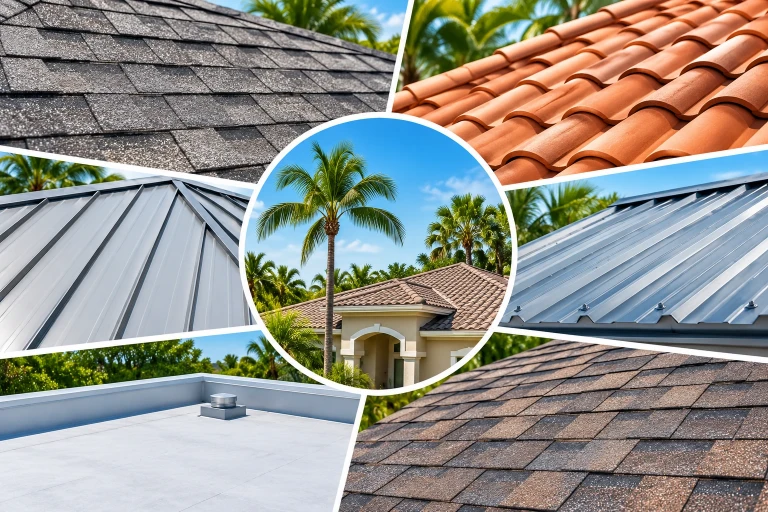
In Florida, an architectural shingle roof usually lasts about 15 to 25 years, a 3-tab shingle roof less. Tile roofs can last 50 years or more, but the underlayment beneath the tiles often needs replacing around 20 to 25 years. Metal roofs last about 20 to 40 years for exposed-fastener panels and 40 years or more for standing seam. Flat roofs typically last 10 to 20 years.
Key facts
- The NAHB study of home component life expectancy lists asphalt shingle roofs at about 20 years. Florida’s sun, heat and storms often push shingles toward the lower end of their range.
- Citizens Property Insurance looks for documentation on shingle roofs over 25 years and tile or metal roofs over 50 years.
- Florida law protects policies on roofs under 15 years old from being refused or non-renewed solely for roof age.
- On a tile roof, the underlayment, not the tile, is usually what wears out first.
- Your roof’s age comes from its last full replacement, not its last repair.
Florida Roof Lifespan by Roof Type
| Roof type | Typical life in Florida | What wears out first | Age Citizens flags |
|---|---|---|---|
| 3-tab asphalt shingle | About 10 to 20 years | Tabs lift and crack in wind and heat | Over 25 years |
| Architectural shingle | About 15 to 25 years | Granule loss, brittle shingles, sealant | Over 25 years |
| Concrete or clay tile | Tiles 50+ years | Underlayment, often around 20 to 25 years | Over 50 years |
| Exposed-fastener metal (5V crimp, R-panel) | About 20 to 40 years | Screws and rubber washers | Over 50 years |
| Standing seam metal | 40+ years | Sealants, trim and flashing | Over 50 years |
| Flat or low-slope (modified bitumen, TPO) | About 10 to 20 years | Seams, edges and areas where water ponds | Ask your insurer |
These are typical ranges, not guarantees. Installation quality, ventilation, maintenance and storm history can move a roof to either end of its range.
How Long Does a Shingle Roof Last in Florida?
An architectural (dimensional) shingle roof usually lasts about 15 to 25 years in Florida. Architectural shingles are thicker, carry higher wind ratings and have largely replaced 3-tab shingles on new roofs. A 3-tab shingle roof, common on older homes, usually wears out sooner, often in 10 to 20 years.
Signs a shingle roof is near the end:
- Granules collecting in gutters and bald patches on the shingles
- Curling, cupping or cracked shingles across a whole slope
- Shingles that lift or crease in ordinary storms
- Repeated leaks in different spots
Read more about shingle roofing in Brandon.
How Long Does a Tile Roof Last in Florida?
The tiles themselves can last 50 years or more. Concrete and clay tiles don’t rot, and they handle Florida heat well. The weak point is the underlayment beneath them, which is the actual waterproof layer. It often lasts around 20 to 25 years, though the range depends on the underlayment type and how the roof was installed.
When the underlayment fails, a tile roof doesn’t always need new tile. The usual fix is to lift the tiles, install new underlayment and re-lay the sound tiles, replacing any that are cracked or broken. That’s why a 25-year-old tile roof with tiles that look fine can still leak.
Watch for cracked or slipped tiles after storms, and leaks that move around the house. Learn more about tile roofing in Brandon.
How Long Does a Metal Roof Last in Florida?
It depends on the type:
- Exposed-fastener panels (5V crimp, R-panel): about 20 to 40 years. The screws go through the panel face, and their rubber washers dry out in the sun. Replacing screws and washers over time is normal upkeep.
- Standing seam: often 40 years or more. The fasteners are hidden under raised seams, so there’s less to maintain.
- Stone-coated steel: often 40 years or more, with occasional touch-ups where the coating chips.
Rust usually starts at scratches, cut edges and old screws. See metal roofing in Brandon for the differences between panel types.
How Long Does a Flat Roof Last in Florida?
Flat and low-slope roofs, common over porches, lanais, carports and additions, typically last about 10 to 20 years. Water drains slowly on a flat roof, so ponding, failed seams and loose edges where the roof meets the house are the usual problems. Keeping drains and edges clear adds years. More on flat roofing in Brandon.
Why Do Roofs Wear Out Faster in Florida?
- Sun and heat: UV light and high roof temperatures dry out shingle asphalt, sealants and rubber washers.
- Storms: tropical storms and hurricanes lift and crease shingles, crack tiles and loosen metal trim, even when nothing blows off.
- Humidity and rain: summer afternoon storms test flashing and pipe boots over and over.
- Algae and shade: black streaks grow on shaded, damp roofs. They mainly affect looks, but debris and shade from trees also hold moisture.
- Salt air: homes close to the coast see faster corrosion of metal and fasteners than inland areas like Brandon.
What Makes a Roof Last Longer?
- Good installation: correct nailing, sealed underlayment and proper flashing matter more than the brand on the shingle wrapper.
- Attic ventilation: a hot, poorly vented attic bakes shingles from below.
- Regular inspections: catching a cracked pipe boot or lifted shingle early keeps a small repair from becoming rotted decking. See how often to get a roof inspection in Florida.
- Prompt repairs: fix leaks right away, and replace worn screws and washers on metal roofs.
- Clean gutters and trimmed trees: less debris on the roof, less standing water.
How Do You Find Out How Old Your Roof Is?
Check these, in order:
- Your closing papers or seller disclosure. They often list the roof’s age or replacement year.
- County permit records. A reroof requires a permit, so Hillsborough County’s records show when the last full replacement was permitted.
- The previous owner or roofer. Warranty paperwork shows the install date.
- A roof inspection. If no records exist, an inspector can estimate the age and remaining life from the roof’s condition.
What Does Roof Age Mean for Insurance in Florida?
Under Florida Statutes §627.7011, an insurer can’t refuse or non-renew a homeowners policy solely because the roof is under 15 years old. For a roof 15 years or older, you can have it inspected before the insurer requires replacement. If the inspection shows at least 5 years of useful life left, roof age alone isn’t a reason to refuse coverage. Read Florida’s 15-year roof rule explained.
Citizens Property Insurance looks for documentation on shingle roofs over 25 years and tile or metal roofs over 50 years. Private insurers set their own rules, and some ask questions about shingle roofs well before 25 years. Check with your insurer, and with citizensfla.com for Citizens’ current rules.
Repair or Replace When Your Roof Gets Old?
Age alone doesn’t mean a roof needs replacing. A well-kept roof near the end of its range may have a few good years left, while a younger roof with storm damage may not. If you’re weighing the two, see roof repair vs. replacement in Florida.
Roof Replacement in Brandon, FL
If your roof is near the end of its life, Tidewell Roofing can inspect it, tell you how much life it likely has left and show you photos of what we find. When it’s time, we handle roof replacement in Brandon, FL for shingle, tile, metal and flat roofs.
Frequently Asked Questions
Do you have to replace your roof every 15 years in Florida?
No. No Florida law requires replacing a roof at 15 years. The 15-year mark matters for insurance: after it, an insurer can ask for an inspection, and a roof with at least 5 years of useful life left can’t be refused for age alone.
Should a 20-year-old roof be replaced?
It depends on the material. A 20-year-old shingle roof in Florida is near the end of its typical life and should be inspected. A 20-year-old tile or standing seam metal roof may have many years left, although tile underlayment may be due.
Is a 13-year-old roof bad?
Not usually. A 13-year-old architectural shingle roof in Florida is typically in the middle of its life. It’s the age when pipe boots, sealants and flashing start to need attention, so regular inspections pay off.
How often should you replace a roof in Florida?
Roughly every 15 to 25 years for architectural shingles, with tile underlayment around 20 to 25 years and metal roofs much longer. The real answer comes from the roof’s condition, which an inspection can confirm.
How long does a metal roof last for insurance purposes?
Citizens treats metal as a hard roof and looks for documentation once it passes 50 years. Private insurers set their own rules, so ask your insurer how it treats metal roofs of your roof’s age.
Does a new roof last longer if it’s installed to current code?
Roofs installed under the 2007 Florida Building Code or later, which took effect March 1, 2009, are built to stronger wind standards than older roofs. Under Florida law, they also avoid the 25% rule when repaired, so a large repair doesn’t force replacing a whole section.
Not Sure How Much Life Your Roof Has Left?
Tidewell Roofing will inspect your roof and give you a photo report with our estimate of its remaining life. Request a roof inspection with no obligation.
Sources
- National Association of Home Builders / Bank of America, Study of Life Expectancy of Home Components (as republished by Florida Realtors)
- Florida Statutes §627.7011(5), homeowners’ policies and roof age (flsenate.gov)
- Florida Statutes §553.844(5), roof repairs and the 2007 Florida Building Code (flsenate.gov)
- Citizens Property Insurance Corporation, inspections and roof eligibility (citizensfla.com)
This article is general information, not legal or insurance advice. Lifespans are typical ranges; your roof’s condition is what counts.